Home / Transforming Wastewater-Based Surveillance to an Actionable Public Health Tool for Managing and Mitigating Infections Across a Range of Scales
Transforming Wastewater-Based Surveillance to an Actionable Public Health Tool for Managing and Mitigating Infections Across a Range of Scales
Status
Competition
Genome Centre(s)
Project Leader(s)
- Michael Parkins and Casey Hubert (University of Calgary)
Fiscal Year Project Launched
Project Description
Environmental DNA and RNA (eDNA) is the genetic material organisms leave behind in their environment, including in water, soil and air.
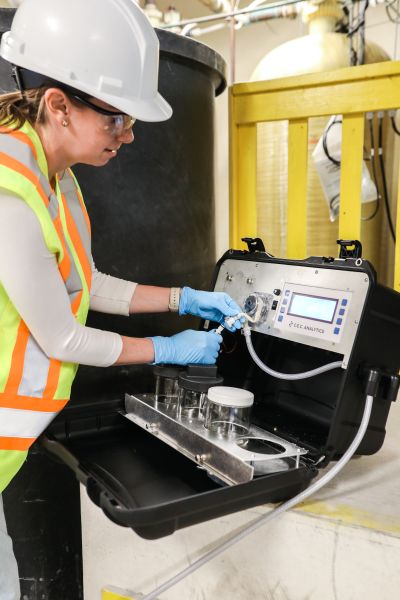
Wastewater-based surveillance (WBS) is a valuable population monitoring strategy combining science, engineering and medicine to improve population health that can transform how health systems identify a changing burden of infections and antimicrobial resistant organisms. WBS provides objective, inclusive and real-time data on any resident population for a variety of measured targets, with eDNA being among the most informative. There are near limitless public health targets that can be monitored using wastewater eDNA, including organisms responsible for disease outbreaks and antimicrobial resistance (AMR), which occurs when bacteria, viruses, fungi and parasites evolve to become resistant to the medications designed to kill them.
This project will implement eDNA analysis to expand a well-established WBS network that monitors large municipalities (via wastewater treatment plants), targeted socioeconomically diverse neighborhood sub-catchments and First Nations communities. Integrated into this network are sentinel surveillance sites that allow for specific monitoring of high-risk populations, including shelters for those experiencing homelessness, as well as multiple hospitals, where the consequences of infection are greatest.
The project will:
- Specifically focus on eDNA targets related to antimicrobial resistance (AMR) as well as pathogens responsible for recent Alberta outbreaks, with the ability to adapt to new threats as they emerge.
- Develop and optimize eDNA WBS across a range of scales, in municipalities and agricultural locations.
- Integrate clinical metadata with wastewater eDNA to create a validated, holistic model for tracking infectious diseases.
- Ultimately the goal of this project is to demonstrate WBS as the tool that can mitigate harms associated with emerging pathogens and AMR through its ability to effectively identify, track, contain and limit their spread. Disseminating these tools to government and public health laboratories, clinicians and researchers will maximize their benefits.